

Fragmented red blood cells (FRC*)
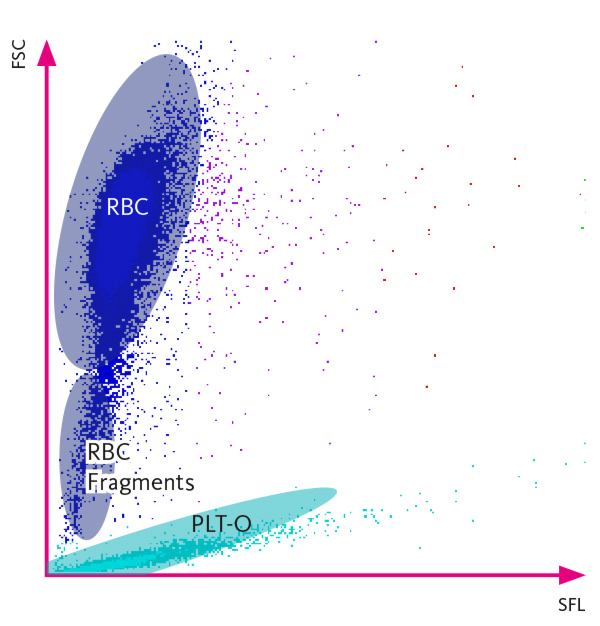
Sysmex analysers use the fluorescence flow cytometry method in the reticulocyte channel to measure fragmented red blood cells (FRC% and FRC#) as research parameters.
A specific area below the RBC area in the RET scattergram is used for identification of fragmented red blood cells. Due to the absence of nucleic acids in red blood cells the intensity of the measured side fluorescence signals (SFL) is extremely low. In addition, the high-angle forward scatter (FSC) is lower than that of intact red blood cells.
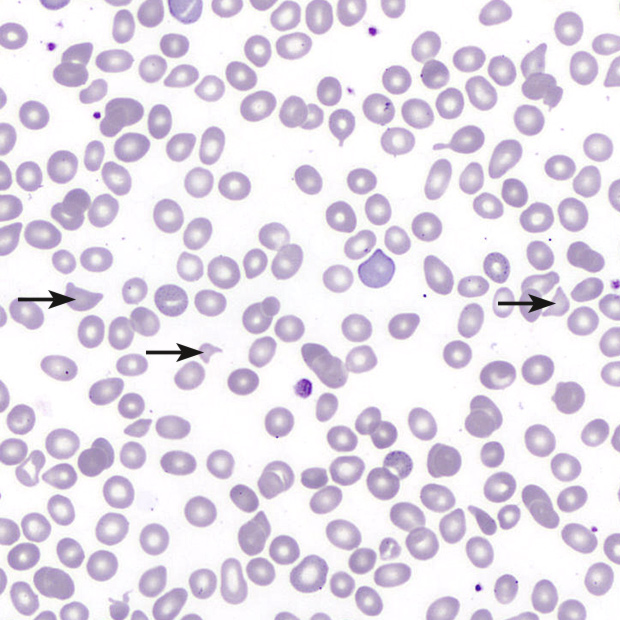
Fragmented red blood cells are generally the consequence of mechanical damage, usually in the context of turbulent blood flow or contact with a pathologically altered endothelium, the latter occurring most commonly in the microvasculature. These abnormal shear forces destroy the integrity of the red blood cells, producing cell remnants that appear as ‘helmets’ (cells with two tapered and hornlike projections on either end) and other odd shapes when viewed under a microscope.
* FRC% and FRC# are research parameters obtained in the RET channel on XR-Series, XN-Series and XN-L Series haematology analysers. Research parameters should not be used for in vitro diagnostics.
