

Lymphocyte activation: reactive lymphocytes (RE-LYMP) and antibody-synthesizing lymphocytes (AS-LYMP)
What are RE-LYMP and AS-LYMP?
Patients with inflammatory diseases need a quick differential diagnosis. For this to be possible, clinicians need to distinguish between inflammations caused by infections and those that are not: they need to determine the responsible pathogen and the immune response status in the event of an infection.
To support a fast initial indication, the new diagnostic RE-LYMP and AS-LYMP parameters for the quantitatively assessment of activated lymphocytes are available on all XN-Series analysers. They help clinicians diagnose, treat and monitor patients with inflammatory conditions by providing additional information about activation of the immune response.
How to use RE-LYMP and AS-LYMP?
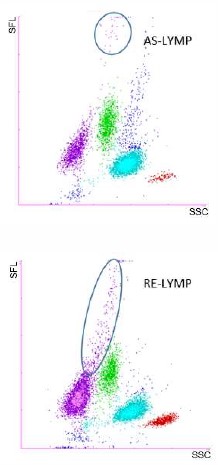
RE-LYMP stands for reactive lymphocytes and reflects all lymphocytes that have a higher fluorescence signal than the normal lymphocyte population. The parameter is given as both an absolute and percentage. The population of AS-LYMP is always included in the RE-LYMP count.
The AS-LYMP parameter quantifies the activated B lymphocytes (plasma cells) that synthesise antibodies. It is given as absolute and percentage and reflects the lymphocyte subpopulation with the highest fluorescence signals.
The combination of the RE-LYMP and AS-LYMP parameters provides additional information about the cellular activation of the innate and adaptive immune response. The change of value in these parameters depends on the nature of the inflammatory stimulus, severity and stage of the infection. The concentrations of these two cell populations indicate whether there is a cell-mediated or humoral immune-response to pathogens. One can therefore differentiate between various indications like viral or bacterial infections, acute or subsiding infections or whether there is an inflammatory condition without an infection.
Benefits
When a patient is suspected of having an inflammatory condition, it is important to rapidly differentiate between various possible reactive conditions. This is important for all patients with infections and inflammations but plays a significant role in dedicated infection wards. RE-LYMP and AS-LYMP parameters provide early information about the inflammatory reaction of patients’ immune system.
They help manage inflammatory diseases by:
- Supporting differentiation between inflammation and infection
- Supporting differentiation between different pathogenic causes of infection (e.g. bacterial, viral)
- Supporting differentiation between different types of immune response (early innate immune response, cellular or humoral immune response). This information may help identify the stage of infection.
- Detailed monitoring of inflammatory conditions.
The RE-LYMP and AS-LYMP parameters are part of the ‘Extended Inflammation Parameters’ package available after activating the licence. Once activated they are available from a routine blood count, together with the CBC and DIFF.
